

depression
Depression in Kenya is rapidly emerging as a public health crisis, particularly among youth and young adults. Earlier this year, in Thika Town, from the Gatundu North Notice Board, there emerged a confrontation between Thika residents and the Kiambu County Government- Kenya representatives at Christina Garden after the county government volunteered to pick a lady hugging a tree to the hospital after finishing her set target of hugging the tree for 3 days in protest after her M-Pesa shop was robbed.
Why Youth Depression Is Rising in Kenya
According to Murithii, depression and Anxiety among youth in Kenya states: many youths are left with broken promises, debt and depression. Political uncertainty has triggered a wave of anxiety, and some are taking their lives due to financial strain. Media outlets like NTV Kenya and Citizen TV Kenya have highlighted the mental health crisis in Kenya, warning that stigma, substance abuse, weak implementations of policies, non-sustainable leadership mentors, limited family involvement, destabilising effects of government transitions and limited access to care continue to worsen the situation.
Stigma: The Invisible Barrier to Mental Health Care
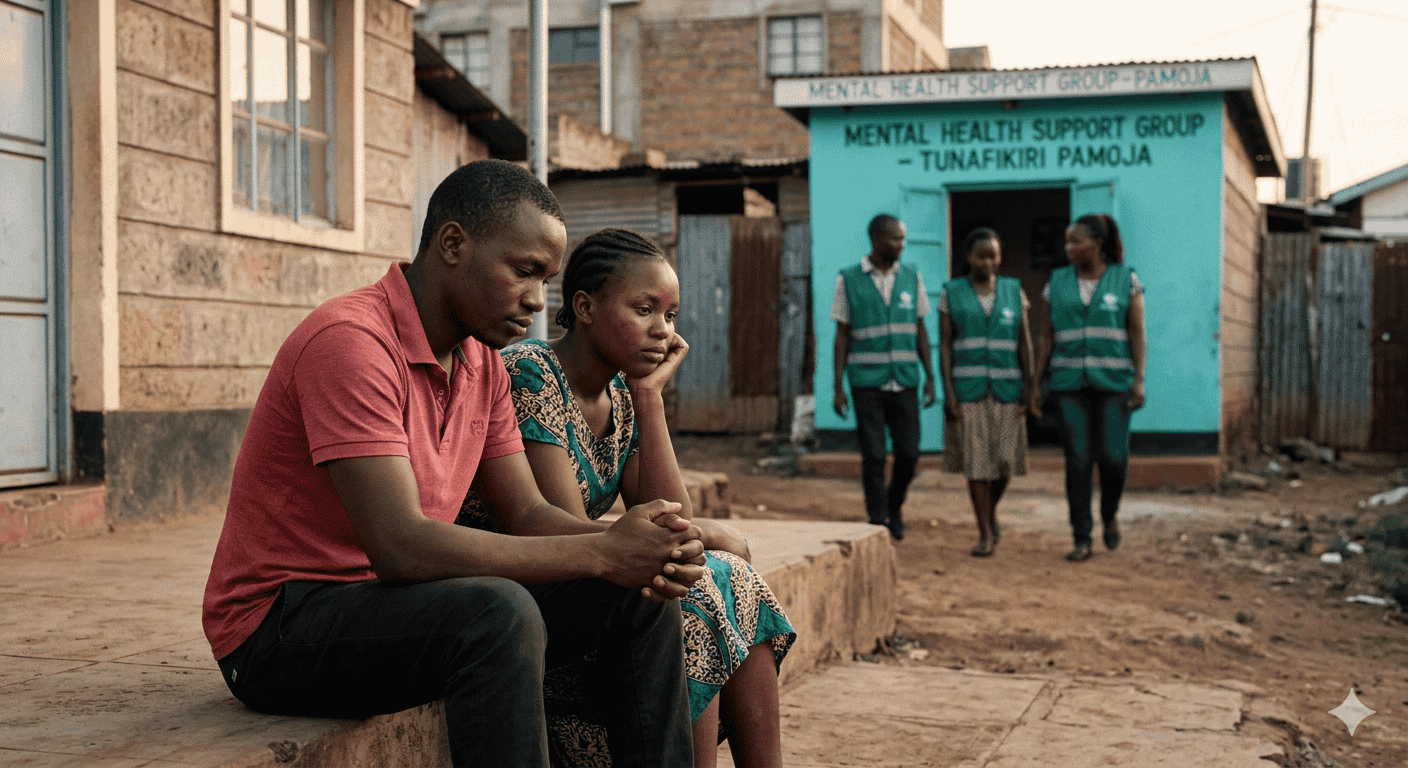
Despite rising rates, stigma remains a major barrier. Many young people avoid seeking help due to fear of judgment, leaving depression hidden and untreated. Mental Health remains underfunded even as policies and strategies, such as Kenya’s Mental Health Action Plan (2021- 2025), exist on paper. Due to limited resources and a weak mental health service delivery infrastructure, these policies remain unhelpful. Evidently so, given the large population in Thika, with fewer psychiatrists, mental health advocates, and psychologists. Thus, vulnerable groups, including unemployed youth and low-income communities, are often left out of decision- making and access to care.
Community Efforts Bringing Hope to Thika
In Thika, efforts to address this crisis are growing. Community counsellors in Thika, notably from Africana College, who are in the Muungano Community in collaboration with the SGCF Foundation by Dr Susan Gitau, are working to provide grassroots support and awareness. Also, working in support with AFCIC, programs to support and improve the livelihood of children, vulnerable families and marginalised communities. ACOP mental health initiatives are actively engaging students through counselling programs, such as offering counselling courses, counselling services, peer support, and awareness campaigns aimed at reducing stigma and promoting early intervention.
Gaps in Policy and Mental Health Support
However, gaps remain. While policies exist, limited funding and unequal distribution of services continue to hinder progress. The disconnect between national strategies and local realities highlights the urgent need for stronger political commitment, increased youth- led advocay and sustained investment in mental health services.
The Way Forward: Breaking the Silence
Addressing the mental health crisis in Kenya requires more than awareness. It demands inclusive policies, increased funding, and community- driven solutions to ensure no one is left behind. Break the silence, challenge the stigma and learn the warning signs.
#SpeakOut!