

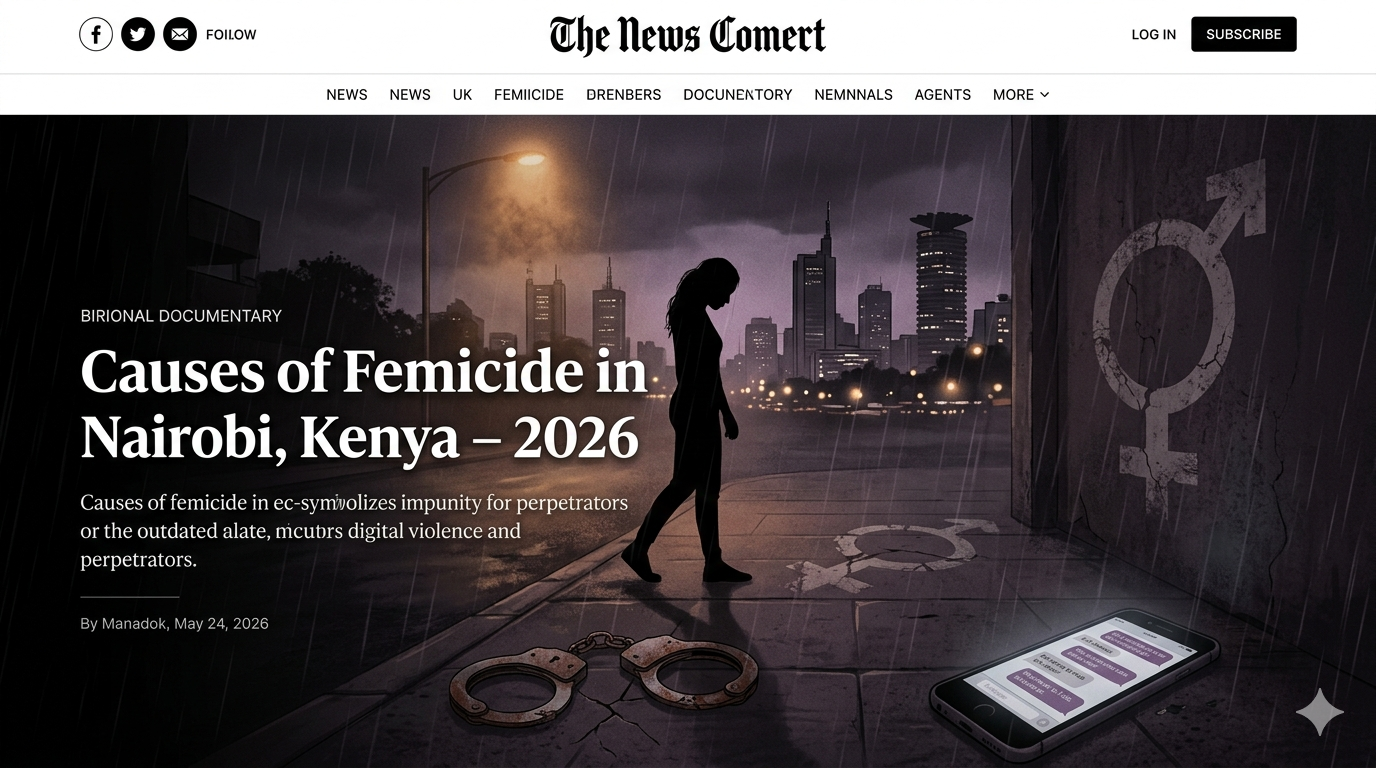
Femicide in Kenya
In 2026, Nairobi stands at a painful crossroads. Despite technological advances and global gender equity campaigns, the number of women killed because of their gender—femicide—has reached alarming levels. From the slums of Mathare to the apartments of Kilimani, a shadow of violence persists, demanding an urgent re-examination of its root causes.
Systemic Impunity and Weak Law Enforcement
The primary driver of femicide in Nairobi remains judicial lethargy and police apathy. Despite progressive laws in Kenya’s constitution, protective orders are often ignored, and reports of stalking are dismissed as “domestic issues.” This culture of impunity emboldens perpetrators, transforming threats into fatal actions.
Deep-Rooted Patriarchal Norms
Cultural attitudes framing women as property continue to fuel femicide. In 2026, economic pressures have intensified male entitlement, leading to lethal outcomes when women assert financial independence or seek separation. Toxic masculinity, celebrated in local media and music, normalizes control through violence.
The Digital Dimension
A new cause unique to 2026 is the rise of algorithmic sexism. Unregulated social platforms and AI-generated misogynistic content have radicalized young men in Nairobi. Cyberstalking frequently escalates into physical stalking, and revenge porn released online often precedes brutal attacks.
Internet Influence
Internet influence has been a major cause of femicide in Kenya according to Grace Ndanu and it has killed a lot of people.
Conclusion
Femicide in Nairobi is not a series of isolated incidents but a structural failure. To reverse this tide, Kenya must move beyond rhetoric: dismantle police corruption, fund community-based male intervention programs, and enforce digital hate speech laws. Without radical accountability, the city’s silence will remain an accomplice to murder.