

Trauma in Children
How Trauma Affects Child Development
As someone studying counselling psychology I have come to understand that childhood is one of the most sensitive and formative stages of human development. It is during this period that a child’s brain emotions and sense of identity are rapidly developing. When trauma occurs during this stage it does not just affect a child in the moment it can shape their entire future.
In my learning and field experiences I have observed that trauma in children can come in many forms. It may be physical emotional or sexual abuse neglect exposure to domestic violence loss of a caregiver or even living in chronic poverty or unsafe environments. What is important to understand is that trauma is not defined only by the event itself but by how the child experiences and processes it.
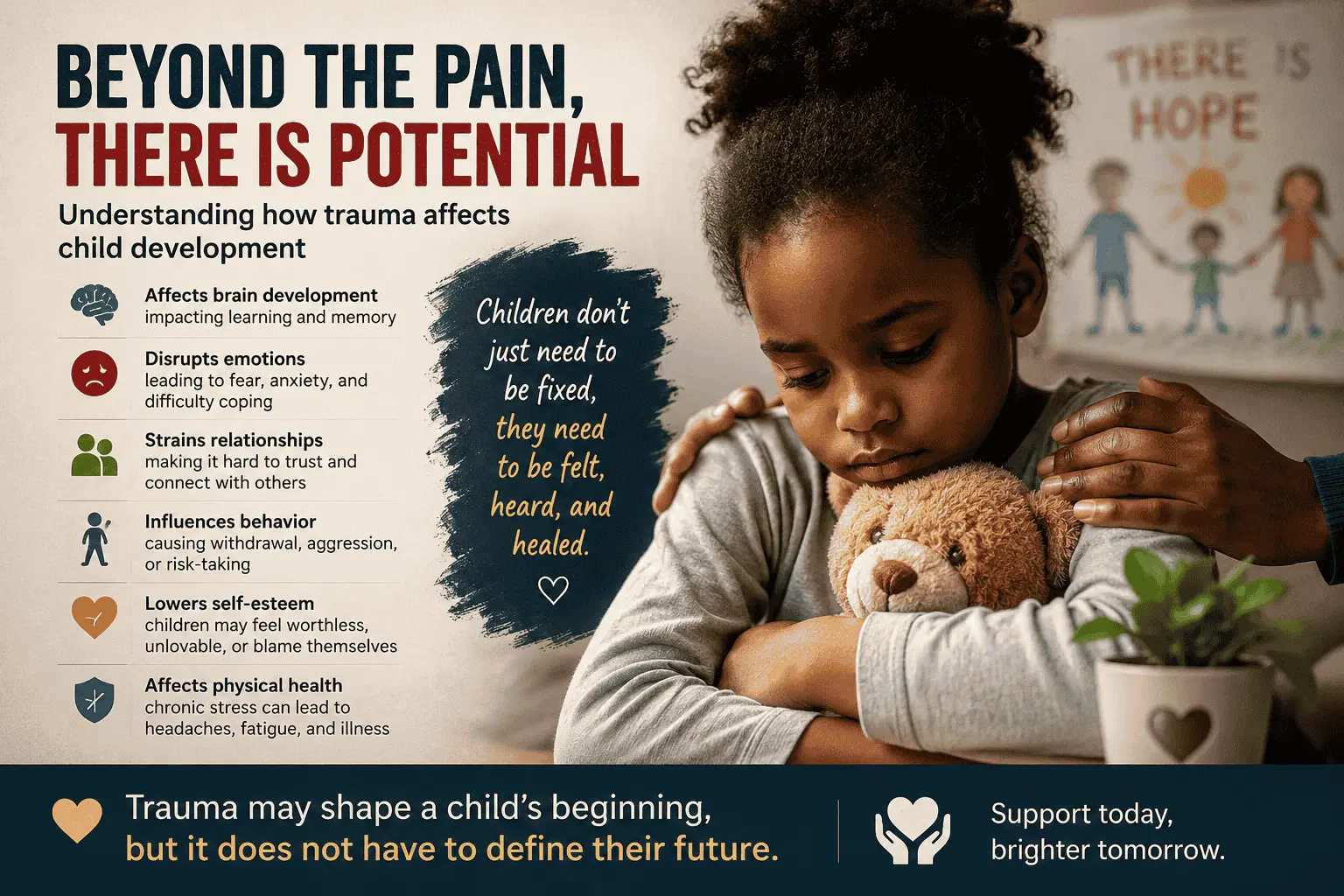
One of the most significant ways trauma affects child development is through emotional regulation. A child who has experienced trauma often struggles to manage emotions such as fear anger or sadness. Instead of feeling safe and supported the child may constantly feel threatened. This can lead to emotional outbursts withdrawal or difficulty expressing feelings in healthy ways. In some cases the child may appear too quiet or too aggressive both of which can be responses to unresolved emotional pain.
Trauma also affects cognitive development. A child’s brain is still developing especially the parts responsible for memory attention and problem-solving. When a child is exposed to ongoing stress or trauma the brain shifts into survival mode. This means the child focuses more on staying safe than on learning or exploring. I have learned that this can contribute to poor concentration in school learning difficulties and low academic performance even when the child is intelligent.
Trauma also has a strong impact on attachment and relationships. Children are expected to form secure bonds with caregivers which later shape how they relate with others in life. When caregivers are the source of fear or inconsistency the child may develop insecure attachment styles. This can lead to difficulty trusting others fear of abandonment or unhealthy dependence in relationships later in life. Some children may avoid close relationships altogether as a way of protecting themselves from being hurt again.
Behavioral changes are very common in children who have experienced trauma. Some children may become withdrawn anxious or overly compliant while others may display aggression defiance or risk-taking behaviors. These behaviors are often misunderstood as bad behavior but they are usually expressions of unmet emotional needs or distress. From a counselling perspective I have learned the importance of looking beyond behavior to understand what the child has been through.
Trauma can also deeply affect a child’s self-esteem and identity. Children who experience abuse or neglect may begin to believe that they are worthless unlovable or at fault for what happened to them. These beliefs can become deeply rooted and may continue into adolescence and adulthood if not addressed. I find this especially important in counselling work because helping a child rebuild a positive sense of self is often part of healing.
Trauma can also affect physical health. Chronic stress in childhood can weaken the immune system and contribute to headaches stomachaches sleep disturbances and fatigue. Over time the body begins to carry the emotional weight of trauma showing how closely mental and physical health are connected.
What I have also come to realize is that children are incredibly resilient. Even after painful experiences many are still able to heal and grow when they are given safety love and consistency. I have seen that healing often begins with one person who listens and cares without judgment a teacher a parent or a counsellor can become that turning point in a child’s life.
Therapeutic approaches such as play therapy cognitive behavioral therapy and trauma-informed care are especially helpful in supporting children to express what they cannot put into words. More than anything children need environments where they feel safe understood and valued so that healing can begin over time.