

When Faith Alone is Not Enough
For many years, faith and psychology were viewed as separate disciplines. Today, however, researchers and mental health professionals like Dr. Susan Gitau increasingly recognise that spirituality plays a significant role in emotional and psychological well-being. A Cambridge University Press review of religious and spiritual interventions found that spiritually integrated approaches can positively influence mental health outcomes, particularly when combined with evidence-based counselling methods. These approaches were shown to reduce emotional distress and improve coping mechanisms among individuals facing psychological challenges (Gonçalves et al., 2015).
Religious leaders often encounter members struggling with depression, anxiety, grief, addiction, marital conflict, trauma, and suicidal thoughts. While prayer and spiritual guidance remain valuable, counselling skills enable leaders to identify deeper emotional concerns and provide appropriate support or referrals when necessary.
Why Religious Leaders Need Counselling Skills
Faith leaders are frequently the first point of contact for individuals experiencing emotional or mental distress. Research published by Cambridge University Press in 2024 highlighted that many patients view their spiritual journey and mental health journey as interconnected and benefit when both aspects are acknowledged in care (Barber & Cook, 2024).
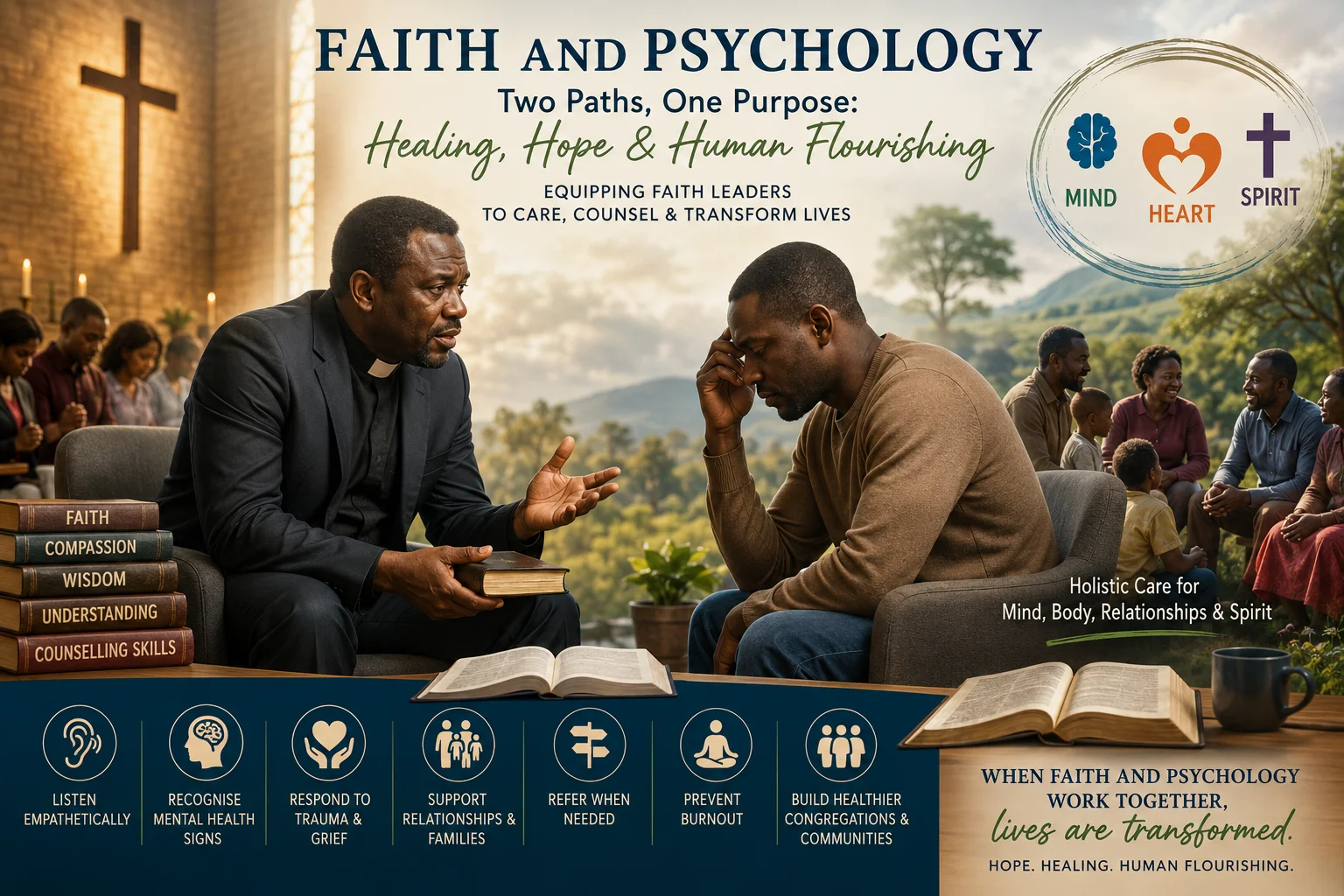
Counselling training helps religious leaders:
- Listen actively and empathetically.
- Recognise signs of mental illness.
- Respond appropriately to trauma and grief.
- Manage family and relationship conflicts.
- Refer complex cases to mental health professionals.
- Prevent burnout within ministry.
These skills allow faith leaders to support individuals more effectively while maintaining healthy boundaries within their pastoral roles.
The Impact of Spiritual Counselling
Spiritual counselling combines psychological understanding with faith-based principles. Unlike purely theoretical approaches that may focus exclusively on behaviour or cognition, spiritual counselling addresses emotional, social, and spiritual dimensions simultaneously.
A church-based mental health promotion study conducted in Kenya found that congregation-led discussions and faith-based support structures strengthened community engagement, improved family relationships, and promoted positive mental health outcomes among participants (Rasmussen et al., 2024).
When counselling is integrated into ministry, congregants often experience:
- Increased emotional resilience.
- Stronger social support systems.
- Greater self-awareness.
- Reduced stigma around mental health.
- Improved family and community relationships.
The Need for Action
Kenya continues to experience a growing mental health burden. Recent government initiatives have acknowledged the need for increased mental health services, including integrating mental healthcare into the national insurance benefits package. However, access to professional mental health support remains limited in many communities, making faith-based institutions essential partners in mental health promotion.
Religious institutions have unique advantages because they are trusted, accessible, and deeply embedded within communities. By incorporating counselling into sermons, discipleship programs, youth ministries, marriage preparation, and pastoral care, churches, mosques, temples, and faith-based organisations can help reduce stigma and encourage early intervention.
Counselling as a Ministry Tool, Not a Replacement for Faith
Some religious leaders fear that counselling may undermine faith teachings. In reality, counselling strengthens ministry by providing practical tools for applying compassion, wisdom, and understanding to real-life challenges. Effective counselling complements prayer, scripture, and spiritual guidance rather than replacing them.
When faith and psychology work together, they create a holistic approach that recognises the whole person—mind, body, emotions, relationships, and spirit.
Conclusion: A Call for Faith Leaders to Embrace Counselling
The future of effective ministry requires more than theological knowledge alone. Today’s religious leaders are called to address increasingly complex emotional and psychological challenges within their communities. Counselling provides practical skills that enhance pastoral care, strengthen relationships, and support healthier congregations.
By embracing counselling alongside faith-based teaching, religious leaders can become more effective healers, listeners, mentors, and community builders. In a world facing rising levels of stress, depression, loneliness, and uncertainty, the integration of faith and psychology offers a powerful pathway toward hope, healing, and human flourishing.